







Choosing a diaper bag comes down to how the bag will be carried, how long it will be out, and how much your child changes during a trip. There is no single best style: backpacks suit hands-free days with a toddler, messenger bags suit adults who want one bag for nappies and their own things, and tote styles suit short trips where the bag stays in the car. This guide compares six popular styles on capacity, cleaning, access speed, and how they behave when carried with other bags.
All six designs below share the same basic job, and all of them hold a full change of clothes, wipes, and a bottle without trouble. Where they differ is in the details that only show up in use: whether the opening can be worked one-handed, whether the base survives a wet floor, whether the strap digs in, and how much of the bag is actually usable space rather than structure. We have given each style a use case and named the situations where it stops being the right answer.
At A Glance
- Best for travel: the backpack that keeps both hands free and opens flat.
- Best structure: the backpack with a built-in base that stands up on its own.
- Best for a newborn: the baby bag with room for the things a first month requires.
- Best for rough floors: the rugged messenger with a reinforced base.
- Best all-rounder: the messenger that doubles as an everyday bag.
- Best when hands must be free: the neckline bag that leaves both hands available.
How We Chose
- Capacity for the real kit: a change of clothes, wipes, a bottle, and nappies for the whole day.
- Opening speed: how quickly the main compartment can be reached with one hand.
- Cleanability: a wipeable lining and a surface that does not absorb spills.
- Carry comfort: strap width, padding, and how the weight sits on the body.
1. The Travel Backpack
This is the design that changed how people travel with a baby, because it solves the airport problem: a rolling case in one hand and a bag on the back leaves no hand free for a ticket, a door, or a child. The bag opens flat like a suitcase, so the contents are visible in a way a deep tote never allows, and the compartments divide clean clothes from the nappy kit. It is the most useful design of the six for anyone who travels with a baby more than once a year.

| Capacity | Full day kit plus a change of clothes |
| Opening | Clamshell, opens flat |
| Carry | Two padded shoulder straps |
| Best for | Travel, airports, long days out |
Pros
- Opens flat so everything is visible at once.
- Leaves both hands free for a child or luggage.
- Clear separation between clean and used items.
Cons
- Must be taken off to open on a floor.
- Less convenient than a single-compartment tote.
For travel specifically, this is the design that makes the most difference.
2. The Structured Backpack
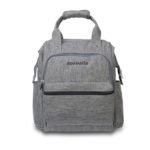
A structured backpack behaves like a piece of furniture: it stands up when you set it down, so nothing spills out on a café floor, and it holds its shape when empty, which means it still looks like a bag rather than a slumped sack on a hook at home. The trade-off is weight, since a rigid body and a wide base need more material to build, and that extra weight is noticeable on an empty carry. The shape is worth it if the bag lives in the car and gets used in fits and starts.

| Capacity | Day kit with internal dividers |
| Opening | Top zip, wide mouth |
| Carry | Wide padded straps, structured base |
| Best for | Unstructured routine, car-based use |
Pros
- Stands up unaided, so nothing spills.
- Keeps its shape when stored empty.
- Wide mouth makes items easy to find.
Cons
- Heavier than a soft bag of the same size.
- Bulky to store in a small flat.
Structured is the better word to look for if your bag lives in a car.
3. The Baby Bag
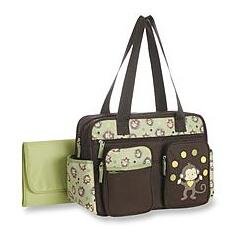
The baby bag category grew out of a single need: a newborn’s first weeks demand far more kit than a toddler’s day out, with a changing mat, bottles, nappies, a muslin, a change of clothes, and often a bottle steriliser. A bag designed for that becomes noticeably light later on, which is a good sign it did its job well. This style also tends to be the most expensive of the six because of the materials, and the most likely to be handed on or resold rather than binned.

| Capacity | Newborn kit plus changing mat |
| Opening | Wide top zip, full interior view |
| Carry | Shoulder strap or stroller hooks |
| Best for | First months, newborn outings |
Pros
- Holds everything a newborn day requires.
- Wide opening shows the whole interior.
- Usually built to be handed on rather than replaced.
Cons
- Overkill once the baby is mobile and active.
- Highest cost of the styles compared here.
Buy this style for the newborn phase and expect to move on afterwards.
4. The Rugged Messenger
Bags fail at the bottom, and a bag that has been set down on a wet playground or a grubby car boot needs to be wipeable rather than absorbent. Here the outer shell and base are built to take that treatment, and the profile is compact enough for short trips where a large bag would just get in the way. It is the least elegant of the six and the least likely to let you down.

| Capacity | One change set plus extras |
| Opening | Zip top, wipeable lining |
| Carry | Adjustable shoulder strap |
| Best for | Messy, floor-level, short trips |
Pros
- Base and shell survive wet and grit.
- Compact size suits quick trips.
- Surfaces clean with a wipe.
Cons
- Fewer internal divisions than larger bags.
- Thinner strap padding over long walks.
When the floor is the main surface, durability outranks capacity.
5. The Everyday Messenger
The crossbody strap carries comfortably with a heavy load, the flap opens wide enough to see everything inside, and a dedicated bottle pouch keeps bottles upright instead of rolling into a corner. Many parents keep using this style long after nappies stop being the main contents, which is a reasonable test of whether a bag was built well.

| Capacity | Medium, with divided sections |
| Opening | Wide flap with bottle pouch |
| Carry | Adjustable crossbody strap |
| Best for | Everyday use, one hand occupied |
Pros
- Crossbody strap distributes weight well.
- Dedicated bottle pouch stays upright.
- Works as an ordinary bag afterwards.
Cons
- The flap needs a free hand to open.
- Bottle pouch takes a fixed share of the interior.
If you want one bag that outlives the nappy years, this is the pick.
6. The Neckline Shoulder Bag
The neckline style solves a specific problem: you need both hands. Worn close to the body with no strap crossing the shoulder, it leaves the hands free for holding a child, opening a door, or pushing a pram, and the open top means there is no zipper to fish for. The cost is capacity and security, since an open top is easier to raid and the shape suits one child rather than two. It is the most comfortable style over a long day on foot.

| Capacity | Medium, best for one child |
| Opening | Open top, no hardware |
| Carry | Neckline, hands stay free |
| Best for | Errands where both hands are needed |
Pros
- Leaves both hands completely free.
- Open top gives instant access to all pockets.
- No strap to dig into the shoulder.
Cons
- Smaller capacity than backpack styles.
- An open top is less secure in a crowd.
Comfort over a long day is what this style buys you.
Buying Checklist
- How long are you out: a full day needs more capacity than an hour.
- How many children: two children need a genuine split compartment.
- Will you carry other bags: a backpack leaves both hands free for luggage.
- Where does it live: a car-based bag can afford to be large and structured.
- Check the lining: wipeable interiors are the difference between a wipe and a wash.
- Test the opening: it should be workable with one hand occupied.
- Think past the nappy years: a messenger or tote style has more life after that stage.
Conclusion
Start with the trip rather than the style. If you travel, the backpack that opens flat is worth more than any amount of pocket design. If the bag lives in a car and is used in fits and starts, a structured backpack that stands up on its own saves the floor. If the days are long and the outings are messy, the reinforced messenger base will outlast everything else in this comparison.
For most families the decision comes down to how the bag is carried: crossbody or neckline styles keep the hands free and the bag light, while backpacks keep the kit organised and protected. Read our longer diaper bag comparisons before you buy, and match the capacity to the child rather than to the marketing.
Buy the style that matches your actual outing, not the one with the most compartments. Our full boy diaper bag reviews cover the narrower version of this question.
FAQ
What is the difference between a diaper backpack and a messenger bag?
A backpack carries over both shoulders and keeps the hands free, and it distributes weight better on a long walk. A messenger bag carries across the body, holds its shape more like a handbag, and usually has a flatter profile that suits a car seat or a buggy. Capacity tends to be similar; the carrying style is the real difference.
How big a diaper bag do I need for a newborn?
Plan on a changing mat, a full change of clothes, nappies, wipes, a bottle, and a muslin, and add a steriliser if you use one. That is a larger bag than most people expect, and it is why newborn bags tend to feel oversized a few months later.
Should a diaper bag be wipeable inside?
Yes. A wipeable lining can be scrubbed and dried quickly, which matters when something spills. Fabric linings absorb and hold smell, and washing them usually means taking the whole bag apart.
Is a structured bag better than a soft one?
A structured bag stands up, keeps its shape and looks tidier in storage, but it is heavier and bulkier. A soft bag is lighter and packs down smaller. Choose based on where the bag is kept and how much it is carried in the hand rather than in the car.