





The fastest way to plant a row of seeds evenly is with a seeder, and the reason is simple: a hand drops roughly one seed at a time, which means thinning, gaps, and a slower start. A push seeder sets the spacing for you and covers the row as it goes, so a bed that takes twenty minutes by hand takes a fraction of that. The two designs we tested differ mainly in how they handle different seed sizes and how well they handle a bed that is not perfectly level.
We judged both seeders on the same three things: whether the spacing stayed consistent along a straight row, whether they worked with the smaller seeds that are easier to overplant, and how they coped with a bed that had clumps and dry patches rather than the fine tilth you find in a freshly prepared seedbed.
At A Glance
- Best all-rounder: the multi-size seeder, which handles small seeds and rows alike.
- Best for large seeds and wide beds: the simple push seeder with a wide hopper.
- Biggest time saver: covering the row in the same pass as sowing.
- What we checked: spacing consistency, seed plate selection, and behaviour on uneven soil.
- What it changes: even spacing means far less thinning later.
How We Chose
- Spacing consistency: seeds should land at a predictable distance along the row.
- Seed size range: a good seeder handles everything from carrot seed to broad bean.
- Row coverage: the tool should cover as it sows, not need a second pass.
- Ease of cleaning: seed plates trap debris and need to come apart easily.
1. The Multi-Size Seeding Machine
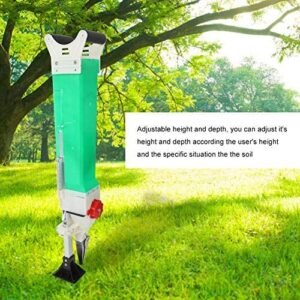
This is the more flexible of the two, and the reason is the seed plate system. Different plate openings suit different seed sizes, and swapping a plate takes seconds rather than requiring a different tool. In practice that matters more than it sounds: carrots, lettuce and herbs need a small opening, while beans and peas need a much larger one, and a single plate will either crowd or starve one of them. The rows came out evenly spaced, and the cover came down over the seed line as it moved.

| Seed sizes | Wide range via interchangeable plates |
| Spacing | Consistent along a straight row |
| Coverage | Covers the row as it sows |
| Best for | Mixed plantings and small seeds |
The multi-plate approach also pays off across a season rather than in a single sowing. Each crop gets the opening that suits it, which means the same tool covers quick salad leaves and slower root vegetables without either being crowded or starved. Over a dozen sowings that consistency is the difference between a bed that comes up evenly and one that needs half thinning out, and thinning is a job nobody volunteers for.
Pros
- Interchangeable plates handle a wide range of seed sizes.
- Even spacing reduces thinning later.
- Covers the row in the same pass as sowing.
Cons
- Plates need cleaning between crops to avoid clogging.
- More parts to store and keep track of.
For anyone growing more than one crop, the flexibility is worth the extra bits.
2. The Simple Hand-Push Seeder
The simpler seeder does the same basic job with fewer moving parts, and in a large bed with large seed it is genuinely the quicker tool. The wide hopper holds a generous amount of seed so you are not refilling every two metres, and the open chute feeds seed as you push rather than in fixed clicks, which means spacing is set by your walking pace rather than a mechanism. On uneven, clumpy soil it needs a slower, more deliberate pace, but the wide coverage makes up for that.

| Seed sizes | Best for medium and large seeds |
| Spacing | Set by walking pace |
| Coverage | Wide hopper, long runs |
| Best for | Large beds and allotment rows |
Where the simple seeder is at its best is a bed that has already been worked well, because it puts seed in at a steady walking pace and covers the row as it moves, so a long run can be finished in one pass without stopping to measure anything. That speed is what makes succession sowing practical: you can put in a small row every week or two, which keeps the harvest coming steadily instead of arriving all at once and going over.
Pros
- Fewer parts means less to clean and store.
- Wide hopper suits long rows without refilling.
- Simple to use with no learning curve.
Cons
- Not ideal for very small seeds.
- Spacing is less precise on uneven ground.
Large beds and larger seed make this the quicker tool of the two.
It is also worth being honest about what a seeder does not do. It does not improve a seedbed, and it cannot plant into soil that has not been prepared, because the tool’s job is to place seed at a consistent depth and spacing in a row that is already fine enough to accept it. A seeder used on a bed that has not been raked and firmed will still produce uneven results, and no setting on the tool will fix that. Preparation still does most of the work; the seeder simply removes the repetitive part of it.
Where the tool earns its place fastest is in the middle of a busy planting week. One seeder can cover a full row in a fraction of the time it takes to pinch seed out of a packet one pinch at a time, and the accuracy of the spacing means less thinning later and fewer wasted seeds that were dropped too thickly in one spot. For a small garden the effect is less dramatic, but the difference between a bed that comes up evenly and one that needs half pulling out is still worth the tool.
Buying Checklist
- Match the tool to your seeds: small seed needs a small opening.
- Check plate range: the number of included plates decides your flexibility.
- Look at hopper capacity: small hoppers mean constant refilling.
- Consider row width: the tool should cover the bed you actually have.
- Check how it cleans: seed plates trap debris and dry out fast.
- Prefer steel or thick plastic: the handle takes a lot of pressure.
- Think about storage: narrow tools hang on a hook, wide ones need a shed.
- Check the row width: the tool should match the bed you actually sow.
One last practical point is storage and reach. A seeder is a tool that lives in a shed, and the most common reason it is never used is that it is awkward to find when the ground is ready. A narrow tool that hangs on a hook will get used every season; a wide one that has to be moved out of the way will not. If you already own a seeder that never leaves the shed, that is a storage problem rather than a design problem.
Conclusion
Between these two, the choice comes down to the seed you are planting and the size of the bed. If you grow a mix of vegetables and herbs, the multi-plate machine is the more capable tool, because a single seed plate will always be a compromise. If your growing is concentrated in a few large rows of beans, peas or squash, the simpler push seeder is faster in practice and has nothing to go wrong.
Either way the saving is real: even spacing means you thin less, and the row is covered in the same pass. Read our wider brand and equipment reviews for more tools that make garden work quicker.
A seeder pays for itself the first time you stop thinning a row by hand. More product comparisons are in our reviews blog.
FAQ
Do seeders work for small seeds like carrots and lettuce?
They do, provided the tool has a small opening or plate for that seed size. Large seeds pushed through a small opening clog the mechanism, and small seeds through a large opening come out in clumps. Using the correct plate for each crop is what makes the difference.
How do I choose the right spacing?
Follow the spacing on the seed packet, and remember it is the spacing after thinning. Sowing slightly closer than the packet says is normal and gives you a choice of seedlings to keep, which is better than gaps you cannot fill.
Should I water the soil before seeding?
Yes. A moist, crumbly bed is far easier to seed than a dry one, because the seeder’s blade and the seed plate work against loose dry soil. Firm the bed lightly first so the seed sits at an even depth, then water afterwards once the rows are covered.
Do I still need to cover the row afterwards?
Not with these seeders, which cover as they sow. If you use a sowing tool without a cover, you will need a rake to draw soil over the row. The advantage of a combined tool is that the covering depth stays consistent across the whole bed.