






The best desk lamps for reading are the ones that put even, low-glare light exactly where the page is, without lighting the rest of the room. A lamp that is bright enough to read by is easy; a lamp that is bright enough for an hour of reading without eye strain is harder, because glare and flicker matter more than raw output. After working through the leading desk lamps, the adjustable swing-arm design takes the overall spot for reach and control, the touch-control lamp wins for the fiddliest setting changes, and the child-friendly lamp stands out for a narrow, warm pool of light.
Every lamp here is judged on the same working conditions: a desk near a window, a book or screen at a fixed height, and at least an hour of continuous use. That means checking the spread of light at the work surface, whether the head can be moved without dragging the base, whether the controls can be operated without looking away from the page, and how the lamp behaves once the room light is off.
At A Glance
- Best overall: the swing-arm lamp, which reaches a page or a keyboard and stays there.
- Best colour accuracy: the natural daylight lamp for long reading sessions.
- Best controls: the touch-sensor lamp, adjusted without looking up.
- Best all-rounder: the dimmable rotatable lamp, cheap to adjust and easy to aim.
- What we checked: glare at the page, head stability, control usability, and heat at the shade.
How We Chose
- Light at the page: the brightest part of the beam should land on the work surface, not in your eyes.
- Glare control: a shade that hides the source from a seated position prevents the squinting that causes tiredness.
- Reach and stability: the head should move to the page and stay there.
- Controls that need no looking: a tap or a dial on the base beats reaching for a switch on the cable.
1. Scandinavian Swing-Arm Desk Lamp
This design treats the lamp as a small adjustable arm rather than a fixed shade on a stem, and that difference decides how usable it is over a long session. The arm swings out over a keyboard, a book, or a page, and the joints hold position once set, so the light goes exactly where the work is instead of where the base happens to sit. The uncluttered Scandinavian styling also keeps a small desk feeling open, which matters on a desk that already has a laptop and a notebook on it.
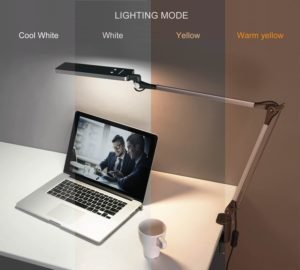
| Reach | Full arm swing over the desk |
| Glare | Shielded head, source hidden when seated |
| Controls | Inline switch on the cable |
| Best for | Desks shared between reading and screen work |
Pros
- Light reaches a page or a keyboard and stays there.
- Joints hold their position without drifting.
- Open styling keeps a small desk uncluttered.
Cons
- The switch is on the cable rather than the base.
- Arm joints need occasional tightening.
Where a task moves around the desk, this is the most flexible lamp here.
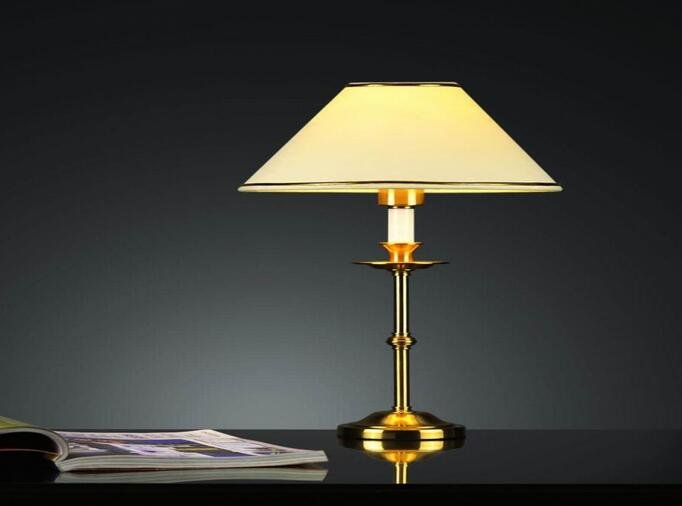
2. Natural Daylight LED Desk Lamp
This lamp’s argument is about the quality of the light rather than the amount of it. A daylight-leaning output keeps page colours looking true in the evening, which reduces the tiredness that comes from reading under a warm, amber wash, and the tall, narrow shade puts the light close to the page instead of across the room. It is the model to choose if the desk lamp is your main light for a couple of hours each evening rather than an occasional addition to a brighter room.
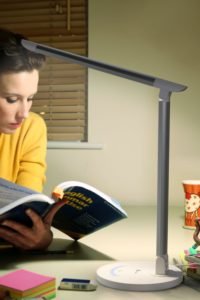
| Light quality | Daylight-leaning, true colours |
| Reach | Fixed stem with tilt head |
| Glare | Deep shade keeps source out of view |
| Best for | Long evening reading |
Pros
- Colours on the page stay accurate in the evening.
- Deep shade reduces direct glare when seated.
- Close, even pool over the working area.
Cons
- Fixed stem has a narrow adjustment range.
- Not bright enough to light a whole desk.
For reading comfort rather than brightness, this is the pick.
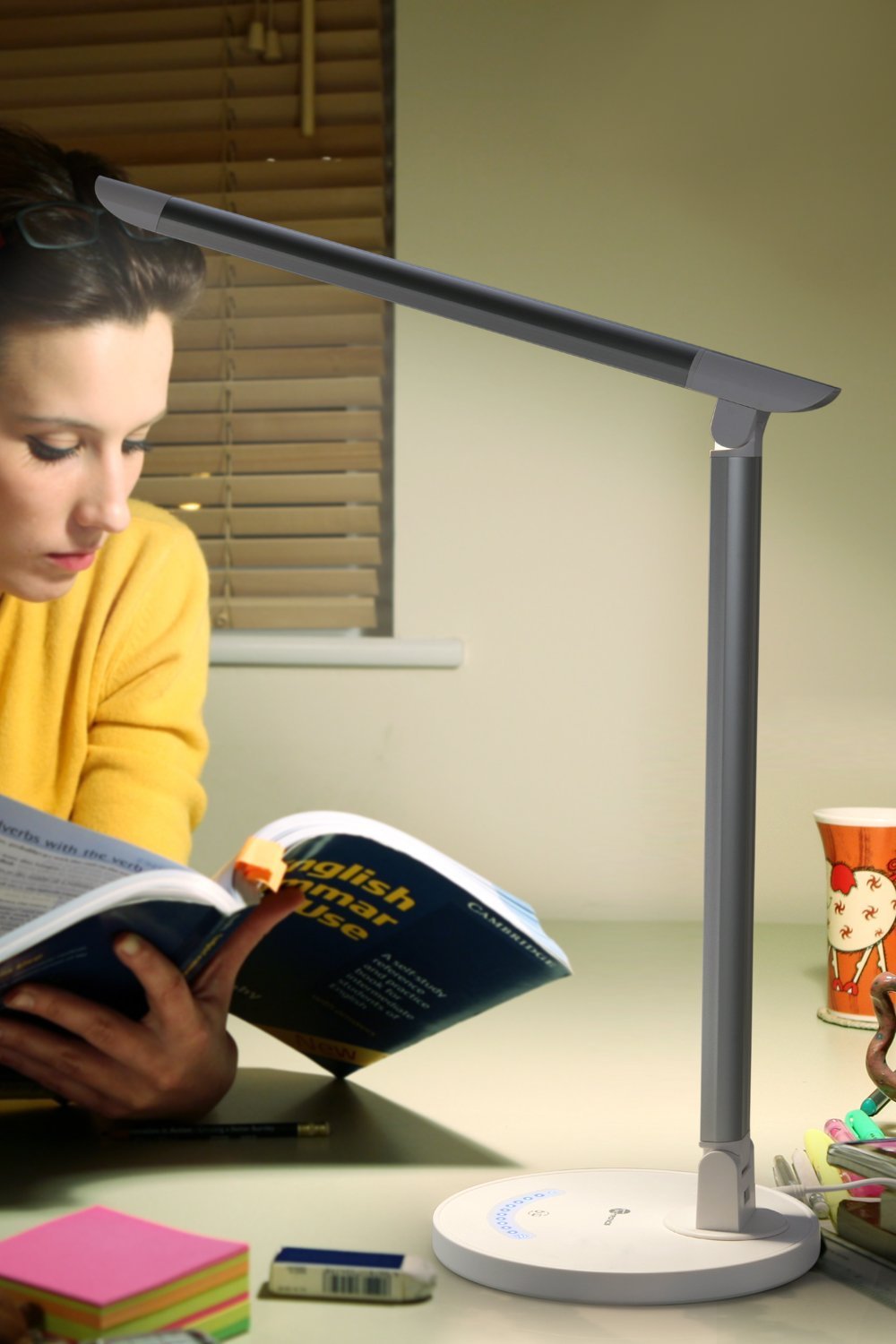
3. Touch-Sensor Desk Lamp
The control scheme is the point here. A touch-sensitive base changes brightness with a tap, so the lamp can be dimmed without looking away from the page or reaching for a switch in the dark, and the touch strip is large enough to find by feel. That matters more than it sounds during long reading, because every small interruption of looking away breaks concentration. The light itself is warm and gentle, and the head can be tilted to cut reflections on glossy paper or a screen.
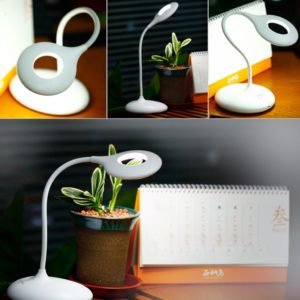
| Controls | Touch strip, no physical switch |
| Light quality | Warm, low-glare pool |
| Reach | Tilt head, fixed stem |
| Best for | Evening reading and study |
Pros
- Adjusts without looking away from the page.
- Large touch strip is easy to find by feel.
- Warm, low-glare light for long sessions.
Cons
- Touch controls can be triggered accidentally by a sleeve.
- Fewer options than a dial-based dimmer.
For reading at night, effortless control is the feature worth paying for.
4. Dimmable Rotatable LED Desk Lamp
This is the straightforward workhorse: a rotating head, a dimmer that gives a genuine range rather than three fixed steps, and a price that makes it easy to own several, so a lamp can follow a person between a desk, a bedside table, and a craft corner. The rotation is smooth enough to aim the head at a wall and bounce light back for a softer effect, which is a cheap trick for reducing contrast on a screen. It is not the most refined design, but it is the one most likely to end up in every room.
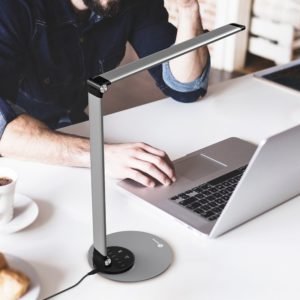
| Controls | Continuous dimming, easy to set |
| Light quality | Neutral LED, low heat |
| Reach | Rotating head on a fixed stem |
| Best for | Budget setups and multiple rooms |
Pros
- True dimming range rather than stepped levels.
- Head rotates smoothly for aimed or bounced light.
- Low heat output at the shade.
Cons
- Build quality is functional rather than refined.
- The stem cannot be extended or shortened.
For the money, this covers more situations than the others.
5. Natural Spectrum LED Desk Lamp
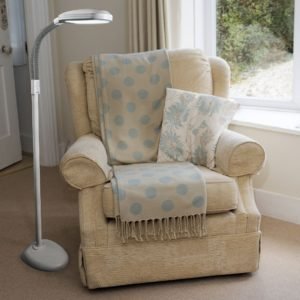
This lamp goes one step further on colour, producing a spectrum output that is closer to daylight than a standard cool white and free of the harsh green cast some cheap LEDs have. The visible result is that coloured objects on the desk, and skin tones on a video call, look correct rather than flat. It is aimed at desks where accuracy genuinely matters, such as drawing, photography work, or reviewing material, and it is less compelling for general reading where the difference is subtle.
| Light quality | Full spectrum, no green cast |
| Reach | Tilt head on a compact stem |
| Glare | Even panel-style diffusion |
| Best for | Colour-accurate work |
Pros
- Colours and skin tones render accurately.
- Even diffusion with no hot spot on the page.
- No visible flicker at low brightness.
Cons
- The benefit is subtle for ordinary reading.
- Adjustment range is limited compared with swing-arm designs.
Where accuracy matters, this is the more sophisticated option.
Buying Checklist
- Sit at your desk first: the lamp should light the page without shining into your eyes.
- Check the head can be aimed: a fixed head often points at the wrong height.
- Try the controls in the dark: they should be usable without looking.
- Confirm the dimming range: some lamps only offer a few fixed steps.
- Match the colour to the task: daylight for accuracy, warm for evening reading.
- Consider the base: a heavier base resists being knocked on a crowded desk.
- Check heat at the shade: important if children or pets share the desk.
Conclusion
The swing-arm lamp is the strongest all-round choice because it puts light exactly where the work is and stays there, which is the single thing most desk lamps get wrong. If reading comfort in the evening is the priority rather than flexibility, the daylight lamp’s truer output and shielded shade do more for long sessions than extra brightness would. For control that never interrupts you, the touch-sensitive lamp is worth the premium.
The dimmable rotatable lamp is the value pick and the one most likely to spread through the house, and the spectrum lamp earns its place on desks where colour accuracy is a working requirement rather than a preference. Whichever you choose, set it up so the brightest part of the beam lands on the page and not in your line of sight. Browse more of our table lamps for reading and table lamp picks here.
Judge a desk lamp by where the light lands, not by how bright it looks from across the room.
FAQ
How bright should a desk lamp be for reading?
Enough to make black print on white paper comfortably legible without a shadow, but not so much that the page appears to glow in a dim room. If you need the room light off to read comfortably, the lamp is too weak; if the page looks glaring, it is too strong or badly aimed.
Do LED desk lamps cause eye strain?
A good LED lamp does not, but a poorly aimed one does. Strain comes from glare, flicker, or mismatched brightness against the surroundings rather than from the lamp type. Choose a flicker-free lamp, aim it at the page, and dim it to match the room.
Should a desk lamp have a USB port?
It is convenient for charging a phone at the desk, and it saves a socket, but it is a convenience feature rather than a quality one. Judge the lamp on light output, glare control and adjustment before you judge it on the port.
Is a swing-arm lamp better than a fixed lamp?
For most desks, yes. Being able to move the light over a keyboard, a book, or a page and keep it there solves a problem fixed lamps have every day. If your desk is small and the work stays in one spot, a fixed lamp with a tilt head is simpler and cheaper.