







The best shower heads for low water pressure are the ones that create a satisfying spray without demanding more flow than the pipe can deliver. That distinction matters: a wide rain head on a tired boiler feels weak and watery, while a compact multi-function head on the same plumbing gives a focused stream that still feels like a proper shower. After comparing the leading designs, the multi-function head is the strongest all-round pick, the handheld-style unit is the one that works hardest in a low-flow bathroom, and the compact fixed head wins where the pipe run is long and the pressure drop is worst.
Shower heads are also the fixture most likely to be blamed for a house’s plumbing problems, when the real cause is usually a partly blocked pipe, a long run from the boiler, or a valve that has been closed down to stop dripping. So this comparison looks at what you can change at the wall: the face size, the spray pattern, whether the flow rate is restricted, and how much of the available pressure is spent on spray rather than on moving water sideways. Knowing which of those matters is the difference between choosing a better head and replacing a shower endlessly.
At A Glance
- Best overall: the multi-function head, which adapts to whatever pressure you have.
- Best for very low pressure: the compact head with a focused spray pattern.
- Best for switching: the head with several spray modes on a single dial.
- What we checked: flow rate, spray pattern, face size, and how much pressure each design wastes.
- Important: if every fixture in the house is weak, the problem is upstream, not in the head.
How We Chose
- Flow rate: a head that restricts flow can mask low pressure and still feel weak.
- Spray pattern: a focused pattern uses available pressure better than a wide one.
- Face size: a large face spreads the same water over more area, which softens the result.
- Controls: a single dial that works in the shower is worth more than several small buttons.
1. Best Multi-Function Shower Head
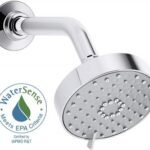
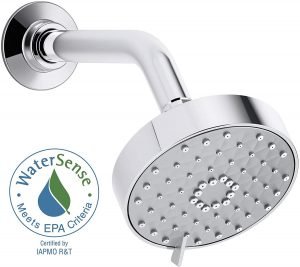
This is the most useful design in a house where pressure varies, and the reason is the dial. Instead of committing to one spray, it holds several patterns, and the difference between them is not cosmetic. A wide rainfall pattern uses a lot of water and feels gentle, a narrower spray concentrates the flow into fewer channels so it arrives with more force, and a mixed pattern is the compromise for most mornings. Being able to switch in a second, without hunting for a small button on a wet head, is what makes it the sensible default for a shared bathroom.

| Spray patterns | Several modes on one dial |
| Flow behaviour | Adapts to available pressure |
| Face size | Medium, balanced spread |
| Best for | Shared bathrooms and variable pressure |
Pros
- One dial gives several genuinely different spray patterns.
- A focused mode makes weak plumbing feel usable.
- Controls are large enough to use with wet hands.
Cons
- More moving parts than a fixed head.
- The widest mode still needs reasonable flow to work.
For most homes, this is the head that solves pressure complaints fastest.
2. Kohler Forte Shower Head
The Forte is a bell-shaped head with a curved face, and the shape is the whole point: the curve gathers water toward the centre of the spray and then releases it over a narrow band, which produces a shower that feels concentrated and consistent even when the supply is not. It is also a design that suits a bathroom where the shower is on the side of a bath rather than in a cubicle, because the face keeps the spray directed rather than letting it fan out into the room. It looks the part in a traditional bathroom too.

| Spray pattern | Focused, bell-shaped face |
| Flow behaviour | Concentrates a modest supply |
| Face size | Compact, close to the wall |
| Best for | Baths and traditional bathrooms |
Pros
- Curved face concentrates a limited flow effectively.
- Compact profile suits a bath-mounted installation.
- Timeless styling for a classic bathroom.
Cons
- Single pattern, so no way to change the feel.
- Small face means less coverage on a wide shower.
A traditional bathroom with modest pressure is exactly where this fits.
3. Best Kohler Shower Heads Range
Buying into a range rather than a single model gives you a matched set, and that has practical value as well as cosmetic value: the same face size and the same flow behaviour in the main shower and the en-suite means the house feels consistent, and if one head wears out or gets replaced you are not hunting for a matching part. Within the range, the decision is usually between a larger head for a main bathroom and a smaller one for a shower cubicle where every centimetre of spray coverage matters.

| Spray pattern | Consistent across the range |
| Flow behaviour | Matched between rooms |
| Face size | Options for main and en-suite |
| Best for | Homes fitting more than one shower |
Pros
- Matching heads keep the whole house consistent.
- Same flow behaviour in every room.
- Easier to source a replacement in the same style.
Cons
- Fitting several heads costs more up front.
- The range does not solve weak plumbing.
More than one shower in the house makes a range the sensible choice.
4. Compact Kohler Shower Head
The smallest face here is the one that wins in the worst plumbing conditions, and the logic is straightforward: the less area the water has to cover, the more of the available flow reaches you. In a long pipe run, an old valve, or a combi boiler that is already working hard, a compact head produces the most usable shower of any design on test. It also suits small shower enclosures where a larger face would waste water on the tiles, and it is the easiest of the four to fit into a high or awkward riser.

| Spray pattern | Compact and concentrated |
| Flow behaviour | Best use of a weak supply |
| Face size | Smallest of the four |
| Best for | Low pressure and small enclosures |
Pros
- Concentrates a limited supply most effectively.
- Suits small enclosures and awkward risers.
- Uses less water on every shower.
Cons
- Small face means less coverage and a narrower spray.
- Less dramatic for a main bathroom.
Where pressure is poor, less surface area is the answer.
One detail worth checking before you buy is whether the head is supplied with a flow restrictor and what its rating is. Modern plumbing codes limit the flow rate of a shower head to protect the system, and a low-flow head is often the only way to get a good shower out of a marginal supply. That sounds like a downgrade, but in practice a restricted head that concentrates its spray can beat an unrestricted one that spreads the same water over a wider face, and the flow rating is printed on the box or on the head itself.
Buying Checklist
- Test the flow first: run the shower and see whether the problem is the head or the pipe.
- Check the flow rate: a restrictive head can make weak plumbing feel worse.
- Match the face to the space: a small enclosure does not need a wide face.
- Decide on spray patterns: a focused pattern copes better with low pressure.
- Check the controls: a single large dial works better with soapy hands.
- Confirm the fitting: most heads use a standard thread, but check yours.
- Plan for the whole house: a range keeps multiple showers consistent.
Conclusion
The multi-function head is the one to buy first, because a single dial lets you adapt to whatever the plumbing gives you that morning: a focused mode when the pressure is poor, a softer pattern when it is strong. The compact head is the choice when pressure is poor all the time, since less surface area means more of the available flow reaches you and the shower simply works better. Where a bathroom looks traditional, the Forte keeps the same focused spray in a shape that belongs.
Before replacing anything, test the flow at another fixture in the house. If the kitchen tap is weak too, the head is not the problem and a new one will disappoint. Read our wider brand and fixture reviews before you commit, and see more of our buying guides here.
Replace the head when the plumbing is sound; fix the plumbing when the whole house is weak.
FAQ
Why is my shower pressure low when other taps are fine?
That usually points at the shower itself rather than the supply. A restrictive or partly blocked shower head, a shower valve that has been closed down to stop dripping, or a long pipe run to the bathroom can all reduce pressure at the head while the rest of the house is fine. Try removing the head and running the pipe briefly to see whether the flow improves.
Do rain shower heads use more water?
Usually noticeably more, because the wide face spreads the flow over a large area and demands a high flow to look right. That is why a rain head feels weak on low pressure while a smaller, more focused head feels powerful on the same supply.
Is a handheld shower head better for low pressure?
A handheld is convenient and flexible, and it can produce a stronger perceived spray because you direct it where you want it, but it does not change the amount of water available. It works best alongside a compact fixed head rather than instead of one.
Will replacing the shower head improve pressure?
It will if the current head is old, clogged with limescale, or restricted by design. It will not help if the issue is a blocked pipe, a faulty valve, or a boiler that is struggling. A simple test is to unscrew the head and check the flow from the pipe itself, which separates the two causes in under a minute.